
What is a variable
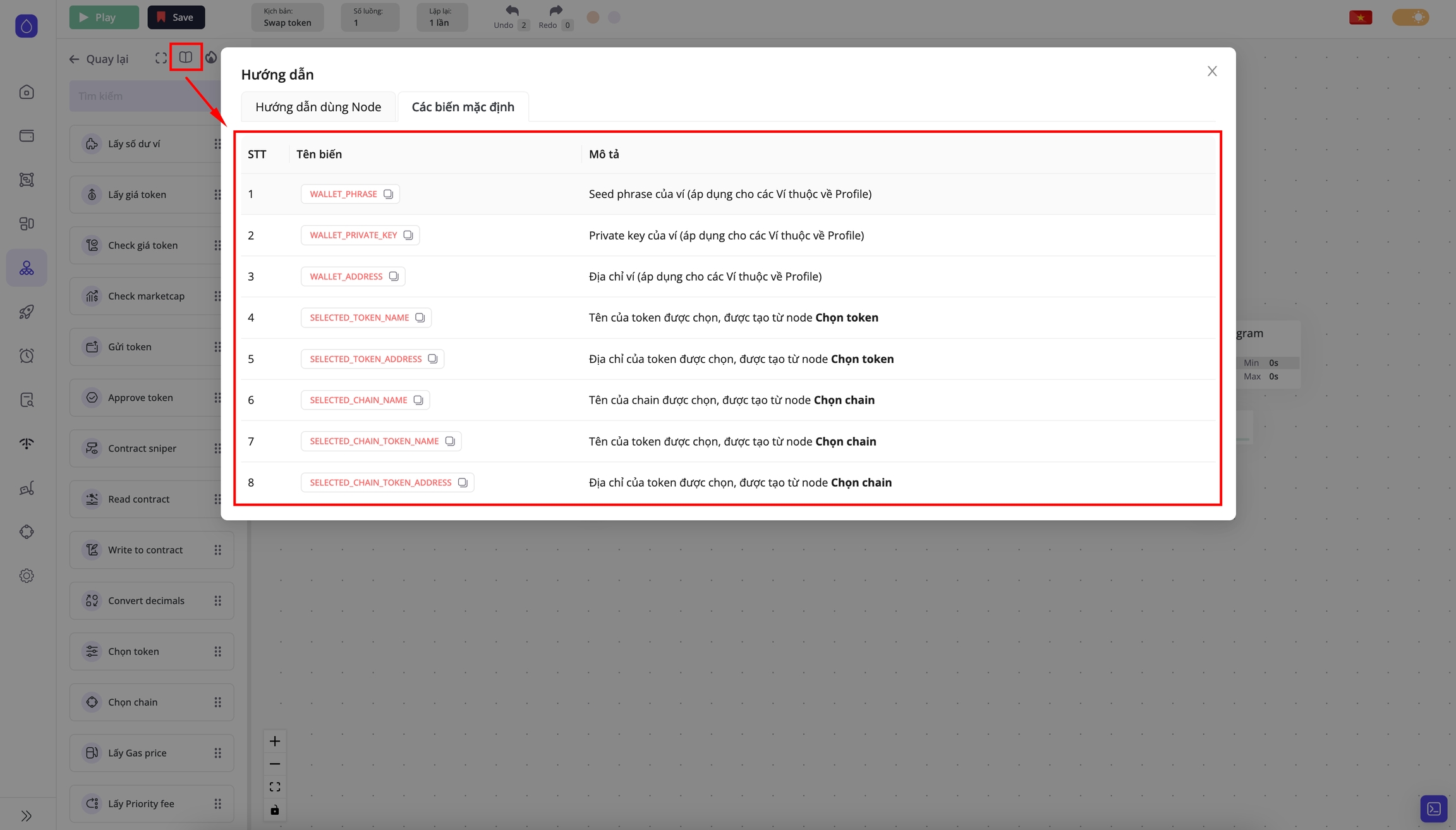
A variable is an important concept in scripts. It allows you to store the result of a Processor after execution, enabling subsequent Processors to access results from previous ones. Variables also store Profile attributes, such as default variables like WALLET_ADDRESS, WALLET_PRIVATE_KEY, WALLET_PHRASE, and more. Variables make Processors more flexible, allowing them to perform tasks based on specific inputs.
How to use variables
Variable names must be written in uppercase, without spaces, and should not contain special characters. To use a variable in a Processor, enclose its name in curly braces { and }
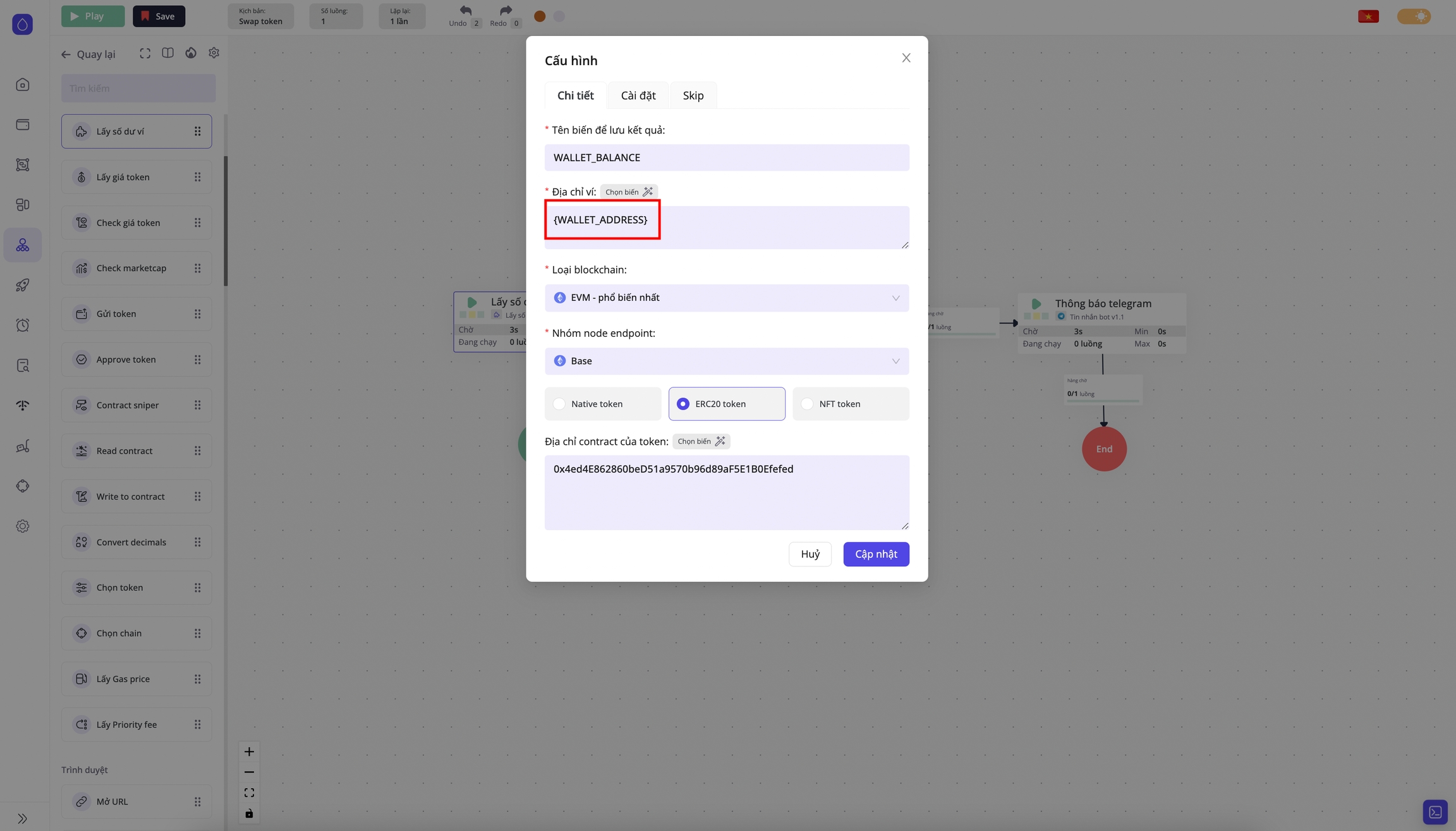
For example, if you have 1,000 Profiles, each containing an EVM wallet, and the script runs 10 threads, each thread will operate on a different Profile. All Profiles include variables such as WALLET_ADDRESS, WALLET_PRIVATE_KEY, and WALLET_PHRASE, but their values will differ for each Profile. These variables store the wallet address, private key, and seed phrase, respectively.
List of default variables in the software
Variable as Processor result
For Processors that need to store returned results, you can save these results in a variable specified in the Variable name for storing result field.
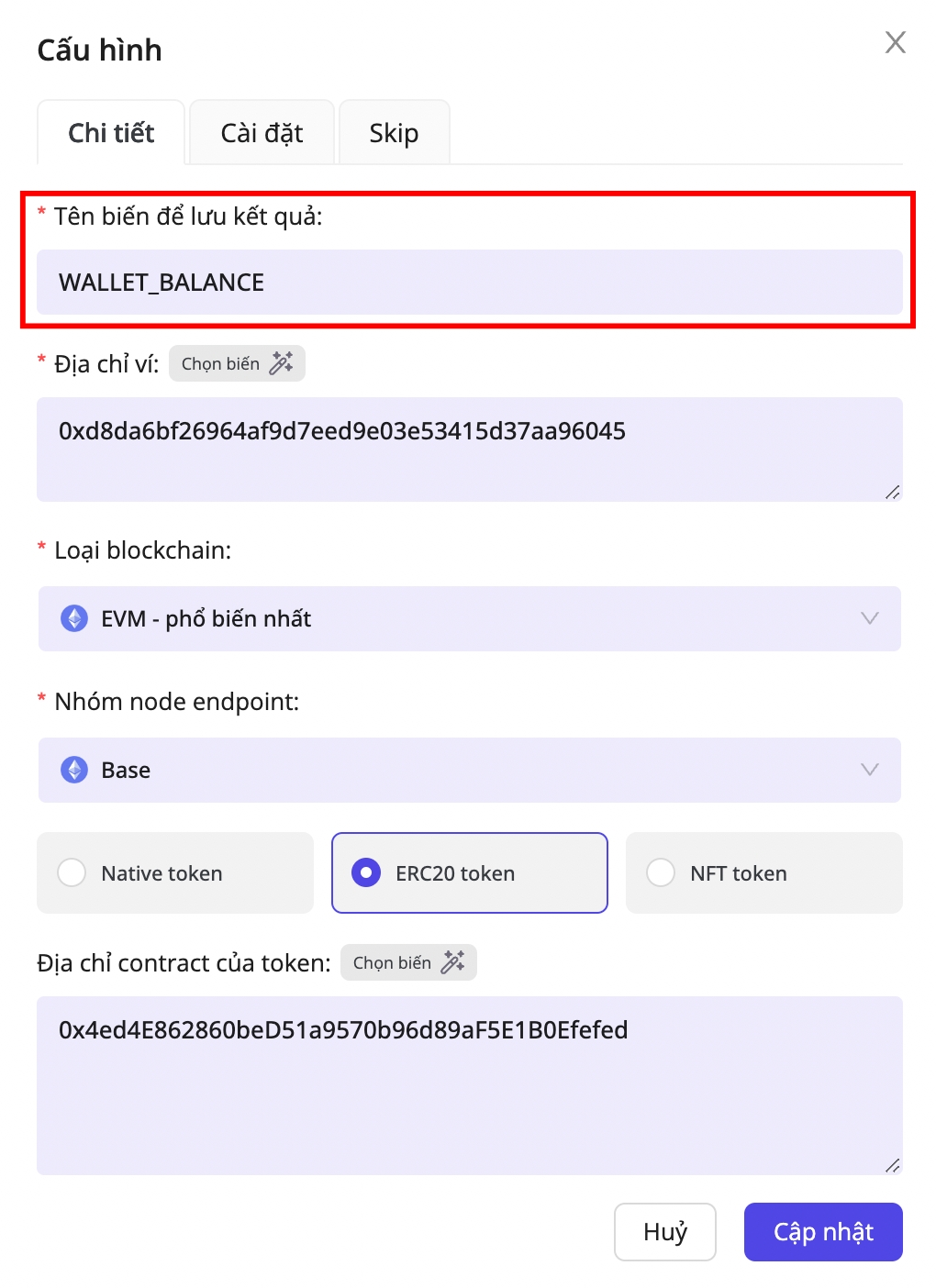
Balance retrieval ProcessorSubsequent Processors can use the results of previous Processors through variables.
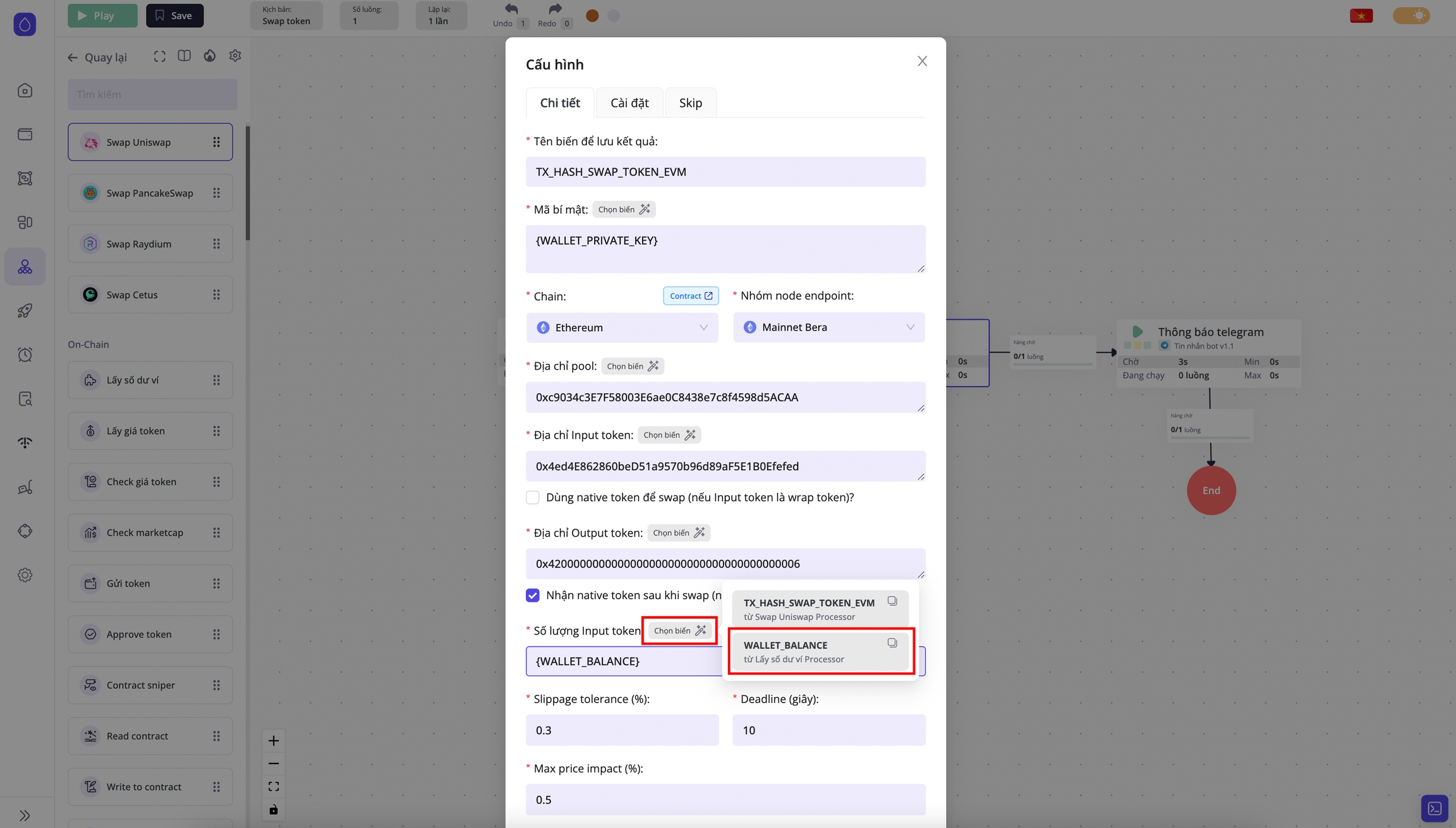
Uniswap swap ProcessorIn the example above, the Uniswap swap Processor will use the wallet's token balance from the WALLET_BALANCE variable, which is the result of the Balance retrieval Processor. You don't need to enter the variable manually—just hover over the Select variable section and choose the variable you want to use.
Last updated